
Introducing the $STARLINK Community Fund: No Dead Zones
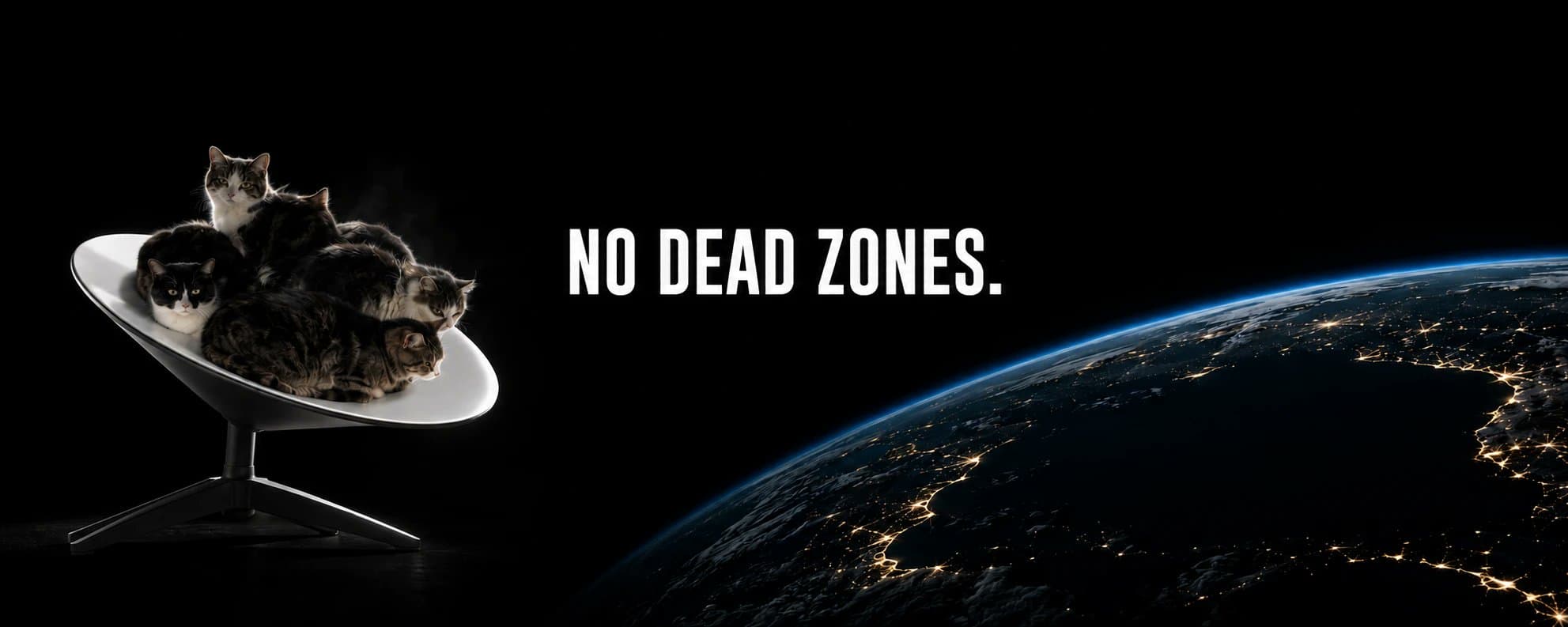
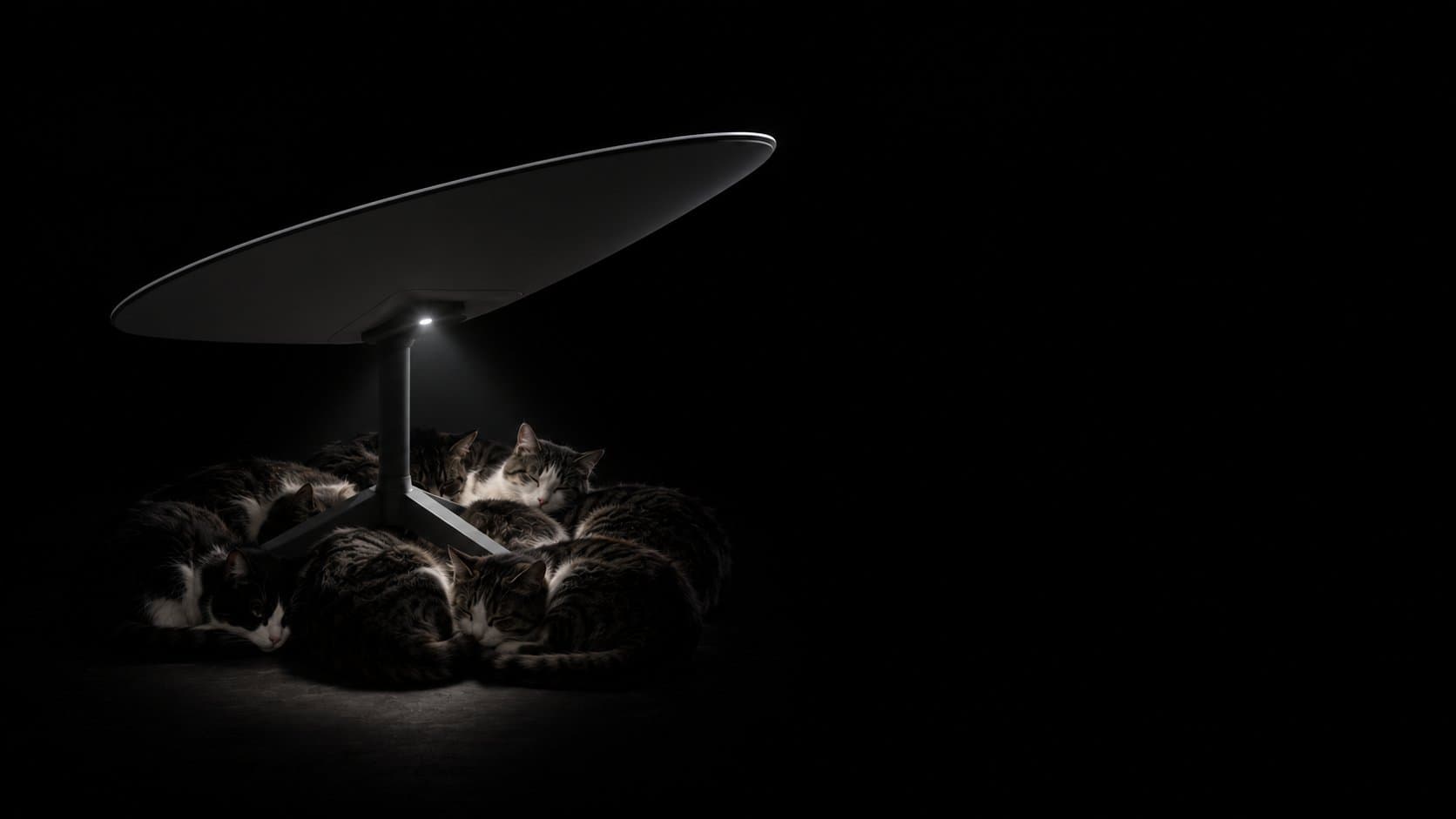
On the last day of 2021, a man in a cold place walked outside and found five cats sitting on his Starlink dish. The dish was warm. The cats were not stupid. He posted it with one line: "Starlink works great until the cats find out that the dish gives off a little heat on cold days." 174,000 people liked it.
The original post, December 31, 2021 →
Starlink noticed. The app got a new line in Settings: "Stowing can also help dislodge any cats that may be napping on your Starlink." The button says STOW AND DISLODGE CATS. The sticker in the box now has five cats on a dish.
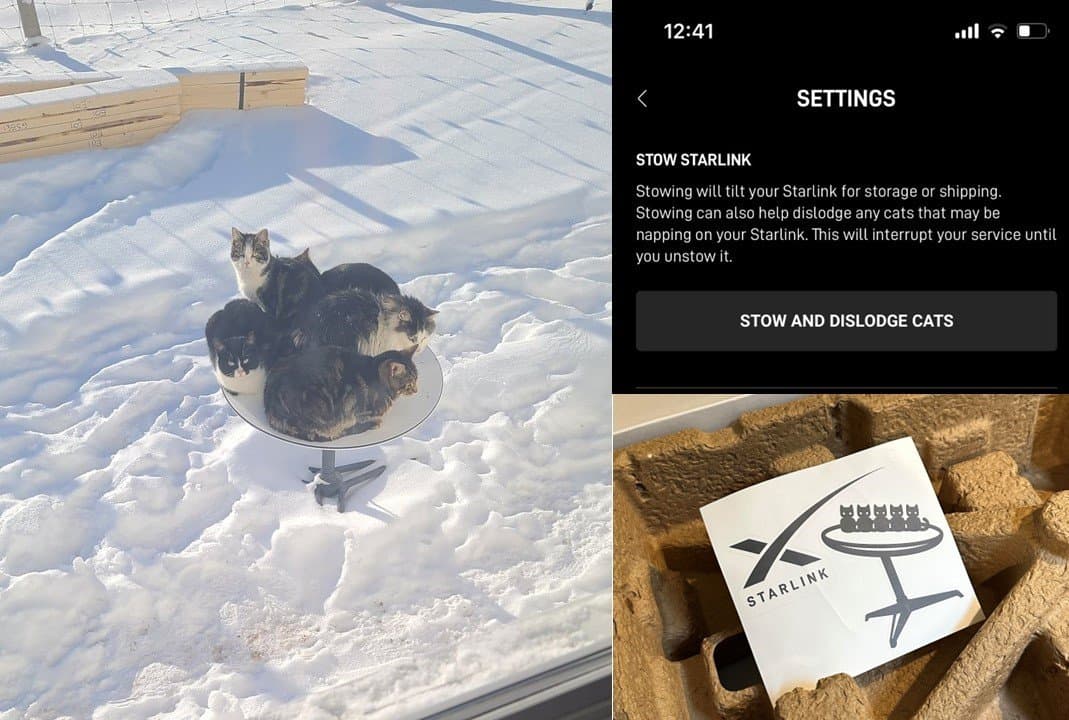
That picture is why this token exists. But the joke was never the whole point.
What Starlink actually did
Strip away the rockets and the stock chatter, and Starlink did one very plain thing: it made "no signal" optional.
A fishing village. A hospital the week after a hurricane. A classroom on the wrong side of a mountain. These places used to be at the mercy of whoever felt like running a cable to them. Now a box the size of a pizza looks up, and the whole internet is there.
We think that matters more than most people give it credit for. Being connected today isn't about scrolling. It's the difference between a farmer knowing the storm is coming and not knowing. Between a kid who can ask a question and one who can't. Between a family that can say "we're okay" after a flood and one that goes silent for a week.
The internet is where the world's knowledge, its tools, and increasingly its intelligence now live. Being cut off from it is a new kind of poverty. It's also one we can actually do something about.
That is the part of the Starlink story we care about. That is what $STARLINK is putting its weight behind.
First, what $STARLINK already is
$STARLINK launched on X Layer through the @ignixbot launchpad on September 9. Before the fund, it already did one unusual thing.
Every trade pays a tax: 1% on buys, 3% on sells. That tax doesn't go to a team wallet. It buys SpaceX equity, tokenized on X Layer as wSPCXx, and pays it out to $STARLINK holders.
So holding the cat means holding a slice of the rocket company. If you've seen $MARSCOIN on BSC paying its holders in tokenized SpaceX, you know the shape. Base has $BLUECHIP and Robinhood Chain has $AI, both priced in tokenized Nvidia; Solana's $ZCAT pays its holders in Zcash. Every chain found its own version. That's the whole trade, and it's been running since launch.
The Fund
Starting today, the $STARLINK community is opening a donation wallet. We're calling it No Dead Zones, because that's the whole job description.
How it works:
- Anyone can donate $STARLINK to the Fund address. The address is fixed and will not change.
- The Fund is a multisig. Community signers hold keys alongside the Ignix founder's wallet, at the address he published earlier, invited by the community to keep watch. No single party can move anything alone.
- The Fund's holdings sit still. What it spends is the SpaceX dividend stream those holdings earn, the same stream every holder gets.
- Every dividend the Fund receives goes toward one thing: buying Starlink kits and putting them where the signal isn't. Disaster zones. Places that are poor. Places the maps still show as blank.
The principal stays. The yield does the work. Give once, and it keeps giving.
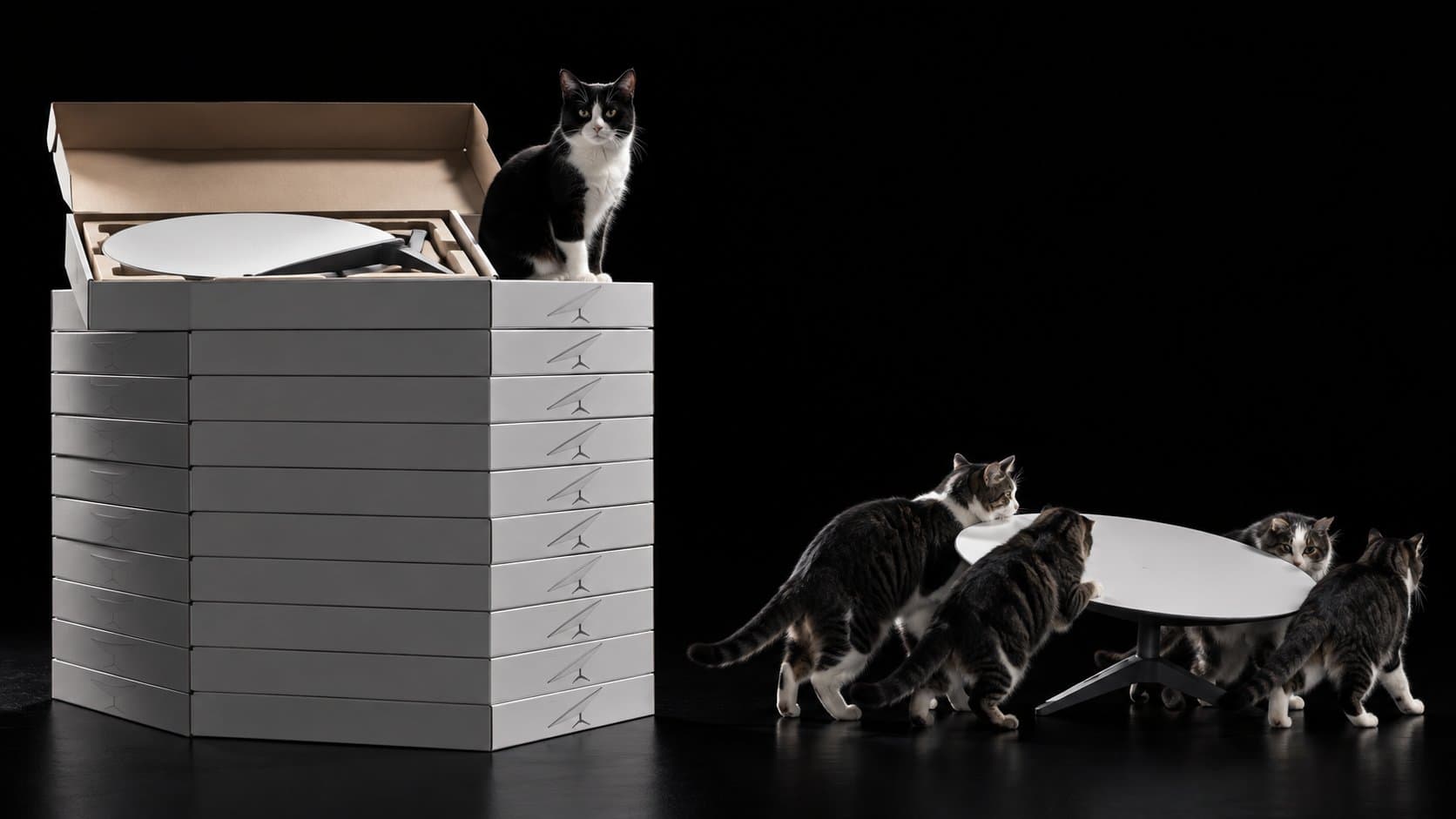
That last part is what makes this an endowment rather than a tip jar. A donation of $STARLINK is never spent. It sits in the Fund and earns SpaceX dividends for as long as the token trades, and those dividends buy dishes, cycle after cycle. The village that gets the hundredth dish will be getting it from a donation someone made in the first month.
Where this sits next to other stock memes
Stock memes did something genuinely new. They took equity most people will never be allowed to buy, put it onchain, and gave a meme coin a reason to exist beyond the chart: $MARSCOIN pays SpaceX, $BLUECHIP and $AI trade against Nvidia, $ZCAT pays Zcash. Respect to all of them. They proved people want this.
$STARLINK is X Layer's, and at the first step it works the same way: holders get SpaceX dividends from the tax, and that part is live.
What we're adding is the second half of the loop.
Most tokens named after a company stop at the share. Ours takes the dividends and puts them back into the thing the company actually makes, then sends it somewhere that had nothing. The tax buys SpaceX. SpaceX dividends buy Starlink. Starlink goes on a roof in a village. The money ends up in the product, on purpose, where you can see it.
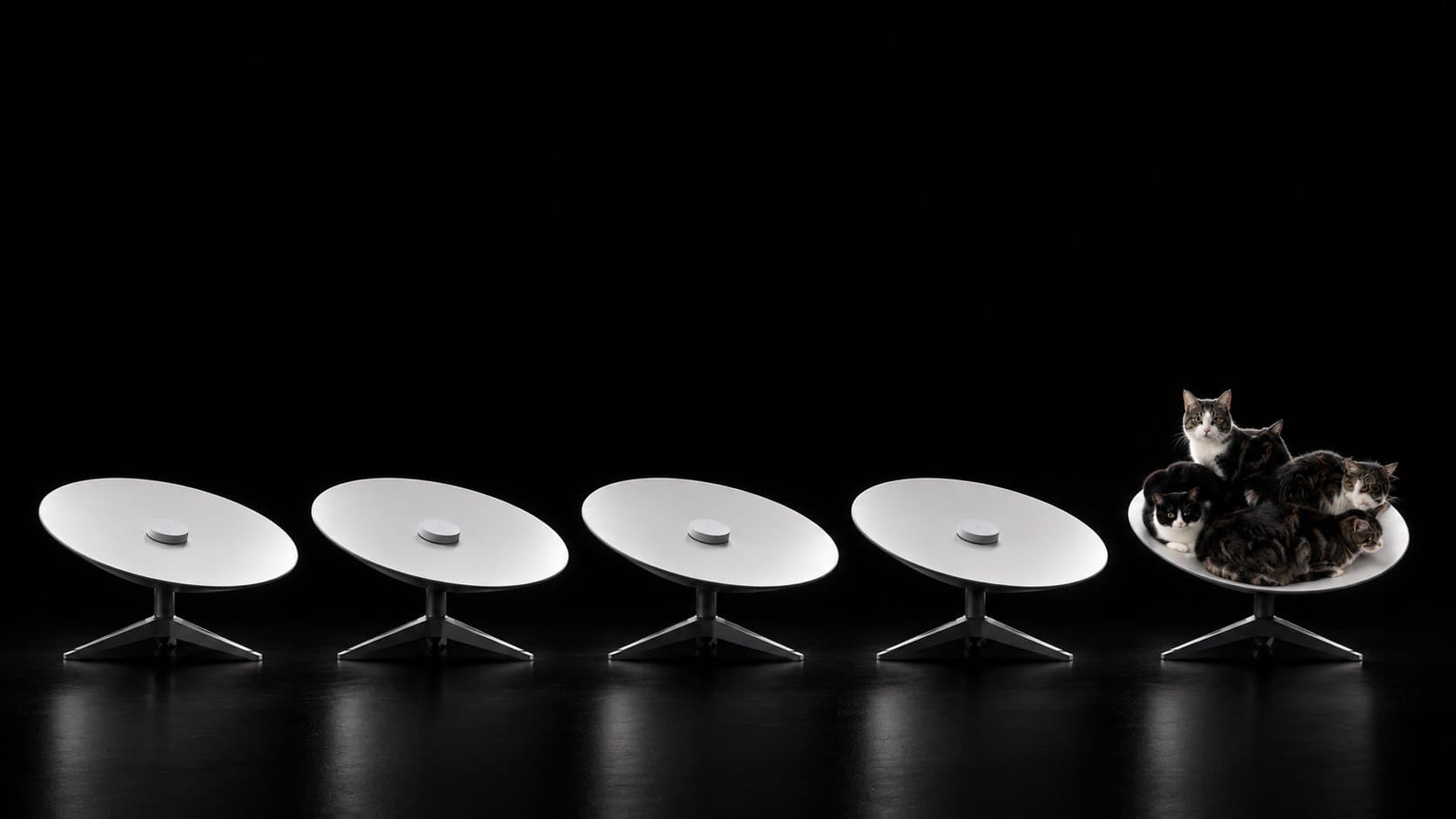
So if you already hold a stock meme, you understand the first half of this. The Fund is the part that makes the second half real: a wallet that never sells, a dividend stream that only buys dishes, and a receipt for every one.
The math, and why there is no ceiling
Two numbers matter here, and they're not the same number.
About 2.2 billion people are offline (ITU, November 2025). Around 300 million of them have no signal at all: no mobile broadband within reach, nobody planning to run a cable (GSMA, 2025). The rest are covered but can't afford it or can't use it. A shared dish helps both groups, but the 300 million is where no one else is coming.
So what does it take?
A shared dish in a school, a clinic, a village hub. The Starlink router takes 235 devices; call it 100 people per dish, twenty households of five. A Standard kit is $349 in the US today, between $199 and $599 depending on the country. Getting it to a place with no signal costs more than the box: import tax, shipping, travel, installation and training. Our estimate is about $650 per place, all in.
300 million people ÷ 100 = 3 million dishes. × $650 = about $2 billion, delivered and installed. Add a year of service and it's about $4 billion. Everyone offline on Earth: 22 million dishes, $14 billion.
Now the other side. Every $1 traded pays about 2 cents of tax (1% buys, 3% sells). That buys SpaceX shares and pays them to every holder in proportion to what they hold. The Fund is a holder like any other, so its income is simple: its share of supply, times the tax.
The rule of thumb: for every 10% of supply the Fund holds, $1 million of volume pays for about 3 dishes, installed, and puts about 300 people online.
The Fund's share only goes one way, because donations go in and nothing comes out. So take a number. Say the community gets it to half of supply. Then $1 million of volume is 15 dishes and about 1,500 people. $10 million a day is over 5 million people a year.
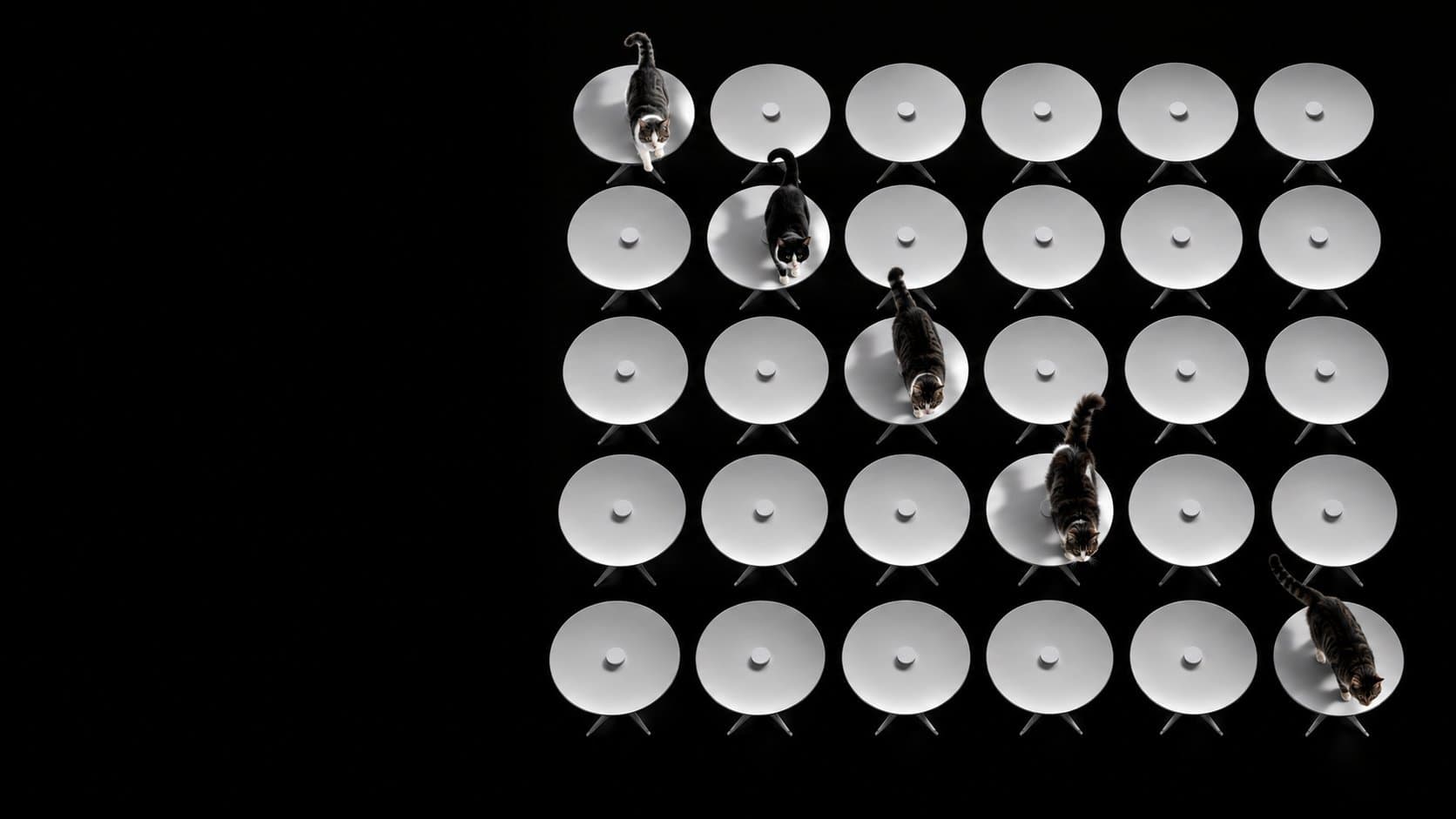
And the full job? At half of supply, about $195 billion of cumulative volume puts a dish within reach of every no-signal person on Earth. Around $1.4 trillion covers everyone offline. At a quarter of supply, double both.
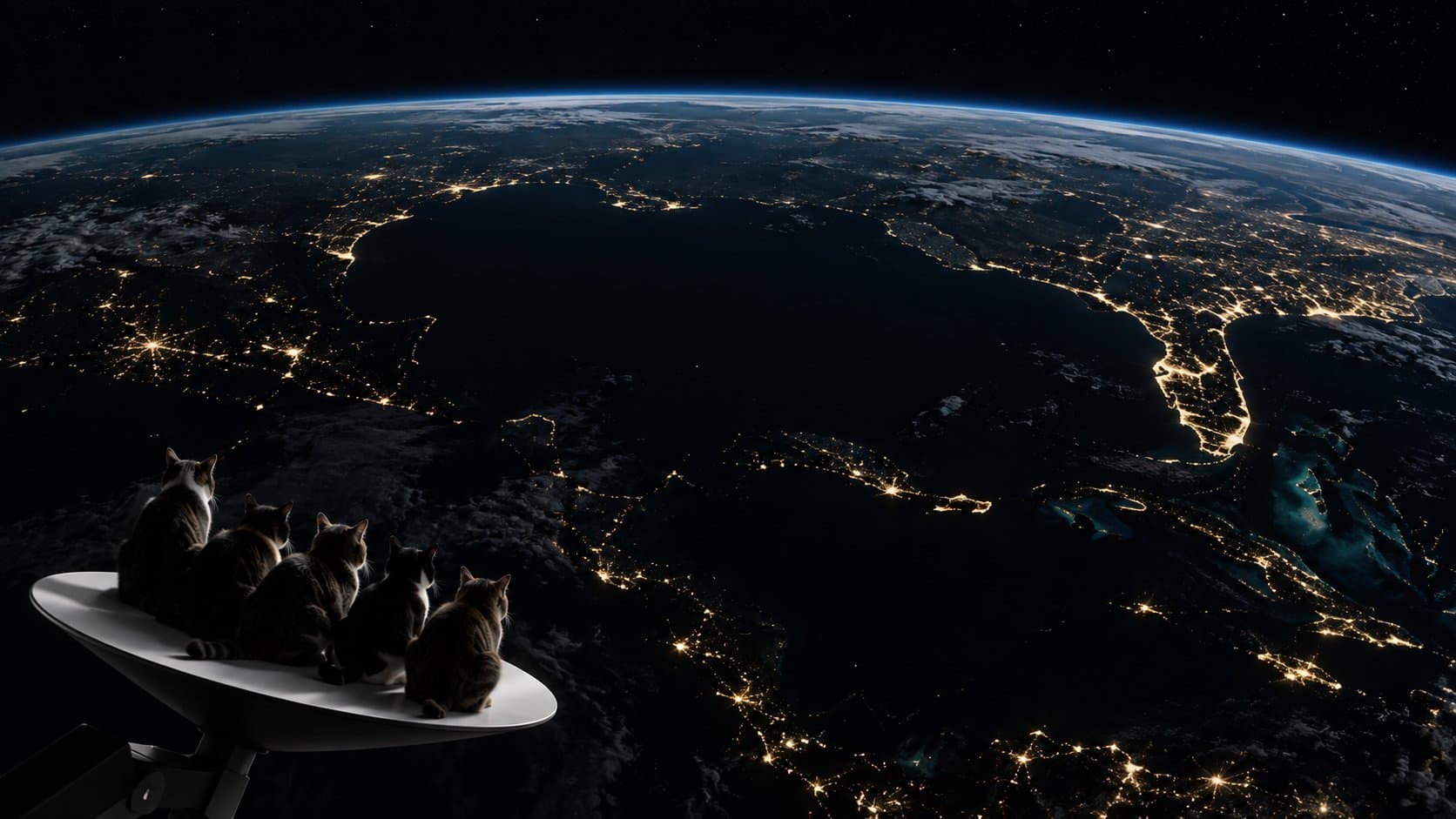
Those are absurd numbers. That's the point. There is no market cap at which this is finished, no day where the Fund says "done" and the cats retire. Every trade buys a little more of the map. Every donation raises the Fund's share and shortens the road.
Most tokens have a ceiling and call it a target. Ours is a planet.
(Inputs and sources: ITU Facts and Figures 2025; GSMA State of Mobile Internet Connectivity 2025; Starlink US pricing, September 2026; Starlink Gen 3 router spec; UN Population Division household data. Assumptions: 100 people per shared dish, about $650 per place delivered and installed, 2% blended tax, tax paid out fully to holders. The Fund's live share of supply is onchain at the address below.)
What we'll show you
Every transaction, in and out, is onchain on X Layer. That's the whole reason we're building here: X Layer's culture is that everything real should be verifiable, and a charity is exactly the kind of thing that should be.
Beyond the chain, we'll publish on X and at starlinkcat.meme:
- The full list of donors, or their wallets, for those who prefer.
- Every kit purchase, with receipts.
- Where each kit went, and wherever the recipients are willing, a photo of it turned on.
- A running ledger of dividends received against kits deployed.
If we ever can't show you where the money went, assume something is wrong and say so loudly. That's how this is supposed to work.
Why this is bigger than one token
Meme coins are usually a bet that other people will show up. Stock-backed tokens are usually a bet that a company will do well. We want $STARLINK to be a third thing: a token where holding it does something in the world that you can point to.
We're not going to pretend one community wallet fixes the digital divide. But a dish on a roof in a village that had nothing is not a rounding error to the people living under that roof. Multiply that by however many dividend cycles we get, and it starts to look like a habit instead of a gesture.
If it works, it'll be the first time a meme became infrastructure. We'd like to be first.
What you can do right now
- Donate $STARLINK to No Dead Zones: 0x989931985D19758fe44022c70e488F3773DA187A
- Share the article, so the people who'd care know it exists.
- If you know a place that needs a dish, tell us. We'd rather take suggestions from the community than guess from a spreadsheet.
The cats found the warm spot. Let's pass it on.
— The $STARLINK community on X Layer
$STARLINK is an independent community token on X Layer. It is not affiliated with, endorsed by, or connected to SpaceX, Starlink, or any of their subsidiaries. Nothing here is investment advice. Crypto assets carry risk; only donate what you're comfortable giving.